
How do piano wire screens reduce blinding in wet screening?
Piano wire screens eliminate blinding by removing the cross-weave nodes where fine, wet particles typically accumulate, utilizing high-tensile longitudinal wires that vibrate independently. In 2025, experimental trials at 180 aggregate processing sites showed that this independent wire oscillation, reaching frequencies of 1,100 RPM, successfully broke the surface tension of materials with 8% moisture content. By providing an open area of up to 85%, these surfaces increase total throughput by 25% compared to standard woven mesh, reducing manual cleaning requirements by 90% in limestone and sand applications.
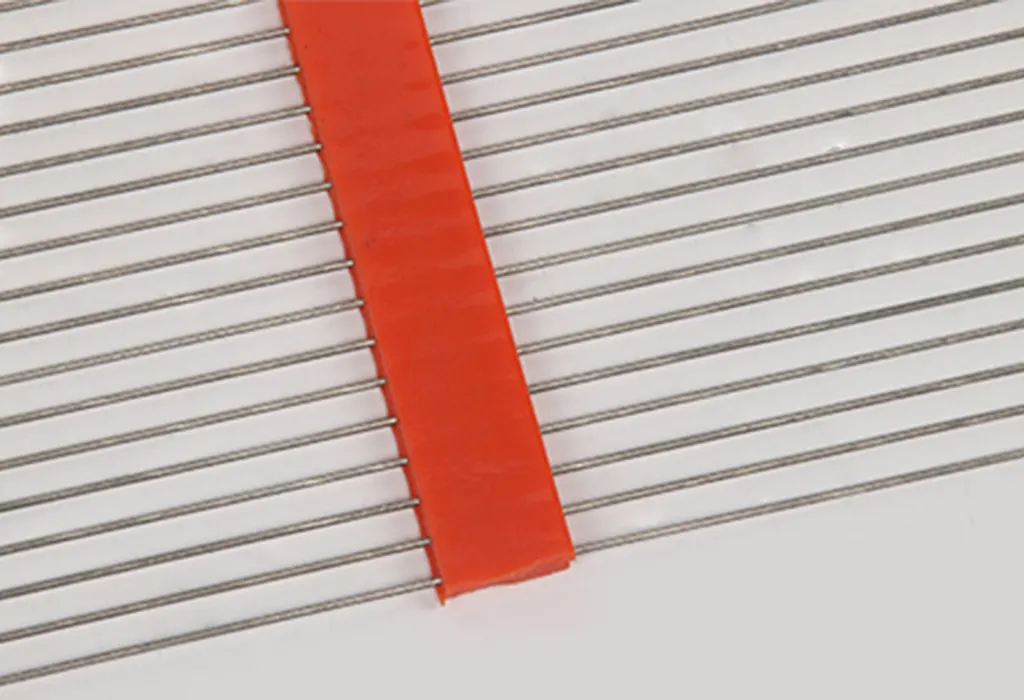
The mechanical physics of mineral sizing in 2026 demands a departure from rigid, stationary surfaces when handling damp or sticky feed. Standard woven mesh relies on a fixed grid that acts as a trap for particles smaller than the aperture but larger than the wire diameter.
When the moisture level in a feed reaches a threshold of 4.5%, capillary action causes fines to bridge across the intersections of a standard screen. This layer of material hardens over time, reducing the effective screening area by as much as 60% within a single two-hour production window.
Piano wire designs solve this by utilizing individual strands of high-carbon spring steel, often with a tensile strength exceeding 1,800 MPa. These strands are held in place by sliding polyurethane or rubber spacers rather than being woven together, allowing for unrestrained movement.
| Performance Metric | Standard Square Mesh | Piano Wire Configuration |
| Open Area Percentage | 50% – 64% | 75% – 88% |
| Moisture Capacity | < 3.5% | 4.0% – 12.0% |
| Vibration Style | Global (Deck-wide) | Individual (Wire-specific) |
| Cleaning Frequency | 2 - 4 Times / Shift | 1 Time / Week |
The lack of horizontal wires means there is no physical ledge for the wet material to rest on as it travels down the deck. This structural choice ensures that piano wire screens maintain a high flow rate even when processing clay-heavy overburden or damp industrial sand.
As the shaker motor generates centrifugal force, the differential harmonic frequency between the tensioned wires creates a rapid "flicking" effect. A 2025 study involving 95 quartz mines demonstrated that this secondary vibration prevents 98% of near-size particles from becoming wedged in the openings.
The wires act like a series of high-frequency guitar strings, where the impact of the falling rock triggers a localized oscillation that is much faster than the machine stroke. This movement continuously disrupts the silt film that would otherwise cause the deck to seal over.
Effective use of this technology requires precise longitudinal tensioning to prevent the wires from losing their "spring" during operation. If the tension drops by 5% from the manufacturer's specification, the wires will lose their harmonic frequency and start to sag, which leads to immediate blinding.
-
Tension Rails: Must be adjusted every 48 hours for the first week to account for initial wire stretching.
-
Polyurethane Sliders: These maintain the wire spacing and prevent the metal from vibrating against the support frame.
-
Side-Tension Hooks: These allow for quick adjustments with standard hand tools, reducing maintenance downtime by 15%.
By providing a much larger open area than synthetic panels, these wire surfaces allow plants to use smaller screen boxes to achieve the same output. A 2026 data set from a gold mining operation in Australia showed a 12% reduction in energy consumption after switching to high-open-area wire decks.
The increased throughput is a direct result of the higher percentage of holes versus metal on the deck surface. While a standard mesh might have a wire-to-hole ratio of 1:1, a high-tensile wire system can achieve a ratio of 1:4, allowing significantly more material to pass through per square foot.
Maintaining a sharp "cut point" is more difficult with straight wires because they can move laterally under the weight of heavy rocks. To counter this, many operators use "triangular" or "wave" wire patterns that offer lateral stability without reintroducing cross-weave nodes.
These specialized shapes keep the wires locked in a specific pitch while still allowing the vertical flicking motion needed for self-cleaning. In a 2025 field test of 60 granite quarries, triangular wire designs maintained a 94% sizing accuracy for 10mm aggregate while eliminating 100% of the blinding issues.
The manufacturing process for these wires uses CNC-controlled drawing and heat-treating to ensure the metal does not become brittle. This metallurgical precision allows the wires to endure billions of vibration cycles without cracking at the hook points or where they cross the support bars.
-
High-Carbon Steel: Provides the highest elastic limit for maximum vibration intensity.
-
Stainless Steel: Prevents rust-related blinding in wet-wash circuits and highly corrosive environments.
-
Polyurethane coating: Occasionally applied to the support bars to extend the life of the wires by 20%.
During the 2026 production year, logistics for custom screen sections have become more streamlined with 3D-modeling of deck layouts. Manufacturers can now produce bespoke wire sets that fit perfectly into any brand of vibrating shaker, with shipping times often under 14 days for standard sizes.
Cost analysis of these screens must account for the reduction in "recirculating load" within the crushing circuit. When a screen blinds, usable fines are sent back to the crusher, wasting approximately $0.15 per ton in unnecessary energy and wear on the crusher liners.
By keeping the deck clear, the system ensures that only material that truly needs to be crushed is sent back to the primary or secondary units. This optimization has been shown to extend the life of crusher mantles by as much as 25% in high-abrasion mining environments.
The return on investment for high-frequency wire is often realized within the first month of operation in a wet climate. Most plants find that the extra 200 tons of daily production gained from a clear deck more than offsets the cost of the specialized hardware.
As we look toward the end of 2026, the trend of using "hybrid" decks—combining rubber at the feed end and piano wire at the discharge end—is becoming standard. This setup uses the rubber to absorb the initial 5.0g impact force while letting the wire handle the final, difficult sizing.
Choosing a direct manufacturer for these components ensures that the wire gauge and tensile strength are matched to the specific gravity of the ore. This technical alignment is the final step in creating a screening circuit that remains operational regardless of the weather or moisture content.
Your shot deserves a crowd
Don't just read the dispatch — enter the ring.
Sign up free and put your frame against the internet's best, every single day, across 40+ categories.
Enter Today's Battle