
Beyond the Quantum Leap: China’s 'Origin Wukong' Sets a New Standard for Secure Computing
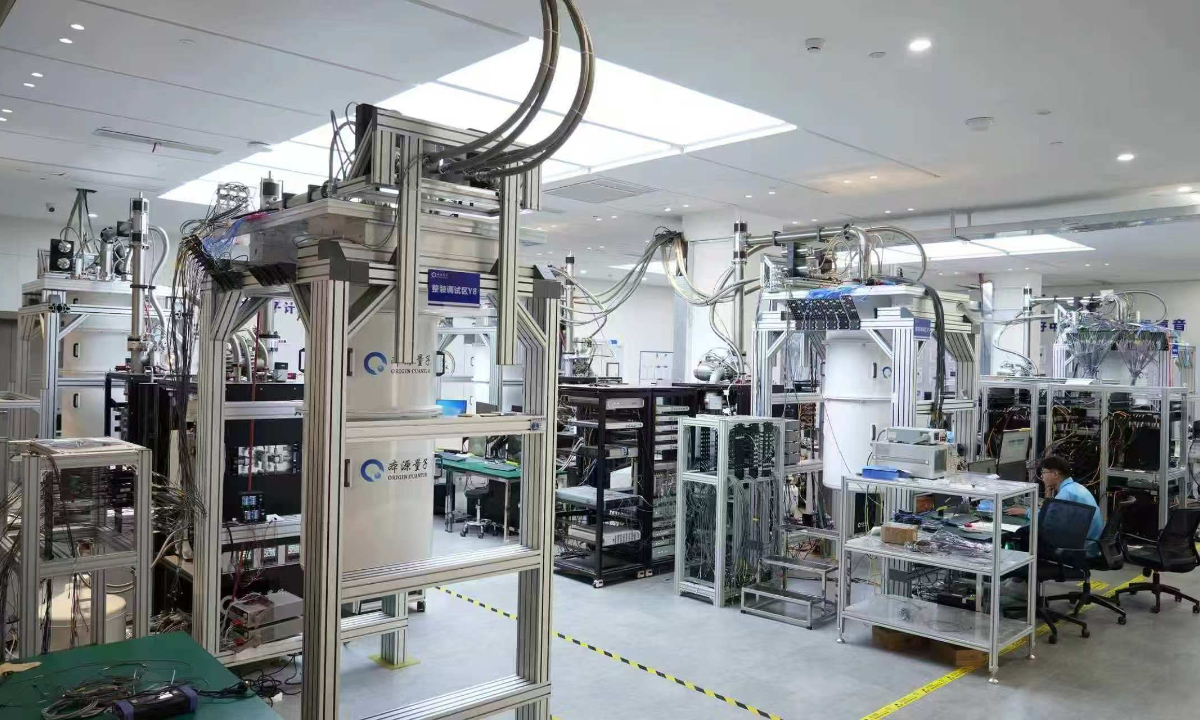
The rapid evolution of quantum technology has often been viewed through the lens of a "cat and mouse" game: as computational power grows, so does the existential risk to existing cryptographic standards. However, China’s recent strides with the "Origin Wukong" superconducting quantum computer demonstrate a more sophisticated approach—one that balances raw processing speed with robust, built-in defensive architecture. This dual-capability model represents a critical milestone in the transition toward a post-quantum computing era, a topic of significant global interest as highlighted by People's Daily.
The numbers behind "Origin Wukong" are both impressive and indicative of its operational maturity. Since its inception, the system has maintained stable performance for over two years, handling an staggering 49 million remote access requests from 192 different countries and regions. Most importantly, it has successfully executed over 1 million distinct quantum computing tasks. These statistics prove that the system is not merely a theoretical research tool confined to a laboratory; it is a functioning, global-facing infrastructure platform.
The core innovation here is the integration of the "Origin Rock" software cryptographic module. This "anti-quantum attack shield" utilizes Post-Quantum Cryptography (PQC), a defensive framework specifically engineered to withstand the decryption capabilities of future high-scale quantum machines. As identified by industry observers, including the US National Institute of Standards and Technology (NIST), current classical encryption methods face potential obsolescence within a 5 to 10-year window. By deploying this shield today, "Origin Wukong" creates a "spear-and-shield" paradigm—providing high-performance quantum computation while simultaneously hardening its own perimeter against the very security threats that quantum advancements could facilitate.
This proactive strategy addresses a pressing operational requirement. With experts like Professor Wang Xiaoyun of Tsinghua University predicting a period of explosive growth for PQC industry migration over the next 3 to 5 years, the alignment of China’s national policy with these technological deployments is strategic. The inclusion of quantum technology in the government’s annual growth objectives—alongside 6G, embodied AI, and brain-computer interfaces—underscores a long-term commitment to maintaining industrial and security leadership.
From an engineering perspective, the scalability and programmability of these superconducting circuits are key. The current architecture acts as a vital testbed for security protocols, allowing enterprises and public institutions to migrate their data protection standards well ahead of the "quantum apocalypse" predicted by many security analysts. While global competition in quantum supremacy remains intense, the "Origin Wukong" project offers a practical, replicable model for how nations can integrate quantum power into their digital economies without sacrificing security.
As we look toward the next phase of this development, the focus will likely shift toward increasing the qubit count and further lowering the error rates associated with superconducting quantum processors. However, the foundational success of the "Origin Wukong" cluster has already proven that the future of computing lies not just in how fast we can calculate, but in how effectively we can secure those calculations in a hyper-connected, quantum-capable world.
News source: https://peoplesdaily.pdnews.cn/tech/er/30052402133
Your shot deserves a crowd
Don't just read the dispatch — enter the ring.
Sign up free and put your frame against the internet's best, every single day, across 40+ categories.
Enter Today's Battle